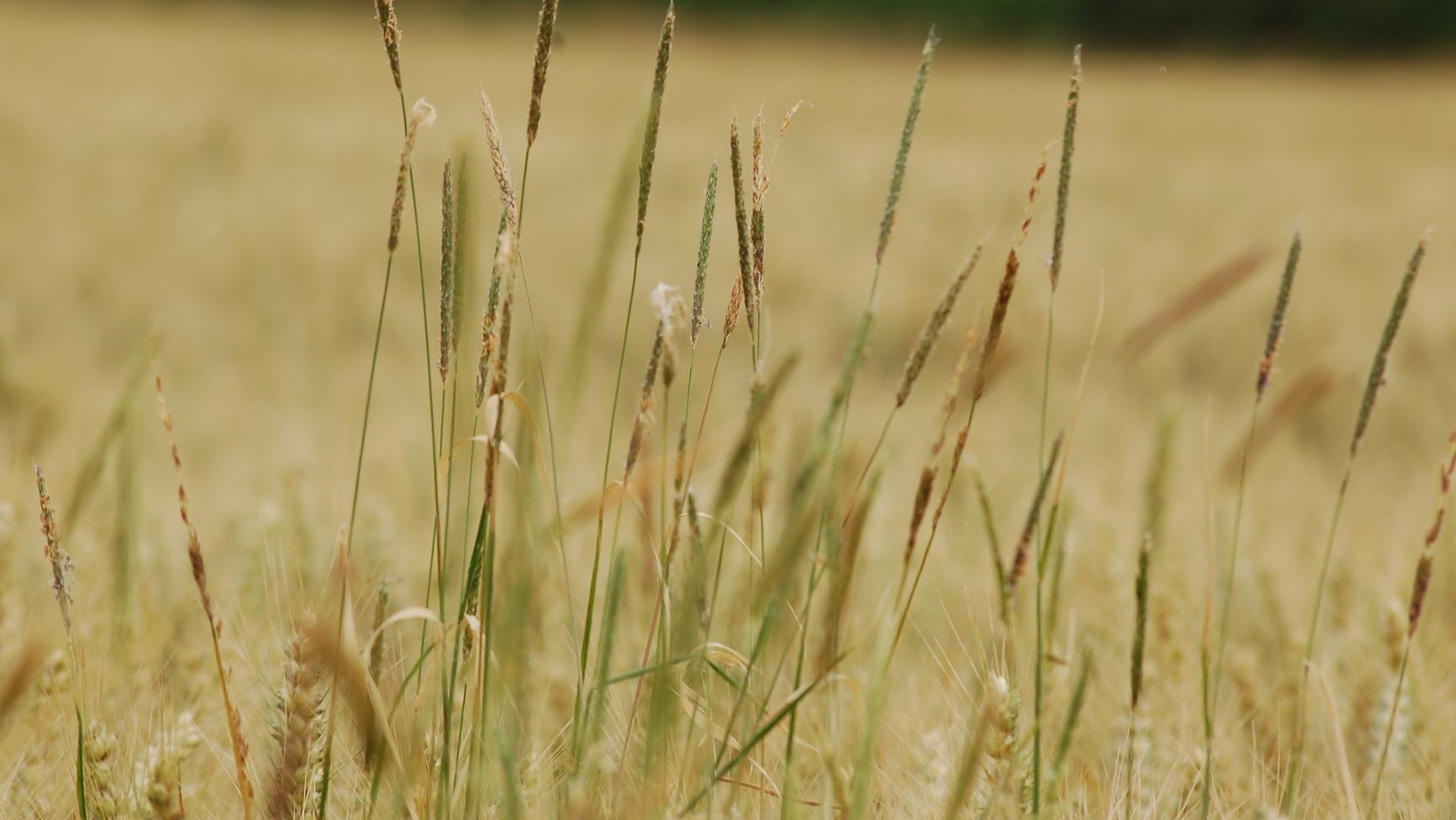
"Blackgrass control is involved in every decision we make at this farm," says Tom Martin, a fourth generation regenerative arable farmer in Cambridgeshire, England.
"Blackgrass grows quickly, spreads extremely fast, and is incredibly dangerous for our wheat crop."
As well as robbing the wheat of light, water and nutrition, blackgrass weeds also carry a toxic fungus called ergot which will infect the wheat, making the entire crop unfit for human consumption.
To protect the structure of the soil and the organisms that live in it, Tom practices cover cropping and crop rotation, and doesn't plough his fields to break up weeds. But he says regenerative practices like no-till would be unsustainable without herbicides.
"They are an absolutely essential part of our tool-box of strategies to fight these weeds and keep the soil healthy."
"Effective blackgrass control can be the difference between a profit and a loss for the year."
To find out more about the threat of blackgrass, you can read more on our blog posts below.