Our News
Written by Alexandra Ranson
August 19 2024
Moa co-founder Professor Liam Dolan features in the Irish Independent
Read more

Moa co-founder Professor Liam Dolan features in the Irish Independent

Irish scientist’s Oxford University spinout is taking on a new generation of toxin-resistant weeds

‍

by John Reynolds for the Irish Independent

5 August 2024

‍

Professor Liam Dolan’s Moa Technology is aiming for a slice of the estimated $5bnmarket for bioherbicides

A start-up co-founded by a Dubliner and spun-out of Oxford University to tackle the problem of herbicide resistance has struck two deals since March that could potentially be worth hundreds of millions.

Moa Technology, which Liam Dolan – who grew up on the Navan Road in Cabra – founded in 2017 along with research fellow Clément Champion, is developing a new generation of both natural and synthetic herbicides. Weeds that reduce crop yields are becoming increasingly resistant to existing weedkillers.

A two-year agreement signed with Nufarm, a listed Australian agrichemical firm, secured an undisclosed upfront payment to Moa to co-develop a new compound. There is also the potential for future options, milestone payments and royalties.

The market for so-called bioherbicides – which use phytotoxins, pathogens or other microbes for weed control – is worth an estimated $5bn(€4.6bn), according to FTSE-listed Croda International. Separately, German biotech and pharma giant Bayer estimates that a new herbicide molecule discovered by its crop science division could be worth €750m in annual revenues.

In March, Moa signed a 10-year partnership deal with Croda. It has both manufacturing capabilities and an extensive library of natural compounds, including extensive research into the microbiome of marine flora, which hold the potential for new microbes. Moa brings its platform based on Prof Dolan’s research, which has been combined with machine learning that provides a new herbicide discovery engine.

Declining soil health and climate change may be contributory factors to increased resistance by weeds such as blackgrass, mare’s tail, waterhemp and pigweed. They can reduce yields of crops such as sugar beet and rapeseed by as much as 50pc. However, overuse of the existing generation of herbicides also hasn’t helped.

“In a way it’s similar to antibiotic resistance. We’ve been using the same herbicides for years, and there hasn’t been any innovation for a very long time in the market. We first used them in the post-war period and then the last new ones were developed around the 1970s,” Prof Dolan said.

“With Moa, we’ve patented a way of using technology to address this challenge. My research looked at the genetic tricks involved in how plants evolved after algae on land developed mechanisms that produced plants.

“When I sequenced the genomes of a number of plants with that in mind, I realised that we could apply what we discovered to the problem of weeds. That need was borne out when I invited some recently retired agritech experts to discuss my findings.”

A multi award-winning academic and former Queen’s Trustee at the Royal Botanic Gardens in Kew, Prof Dolan studied botany at UCD then did a PhD in biology at the University of Pennsylvania.

He spent 25 years at Oxford, rising to become the head of its department of plant sciences. In April, he was elected a member of the Austrian Academy of Sciences, and since2020, he leads research at the Gregor Mendel Institute of molecular plant biology in Vienna, where he is currently deputy director, while remaining a visiting professor at Oxford.

“One of the reasons I moved there is that I knew the ecosystem was there to develop something commercially, if the need arose,” he said. “However, Vienna had the lure of being able to spend all of my time on fundamental research, compared to Oxford where some time is taken up teaching.

“The funding is very good here too. I’ve recently applied for a patent here, and having set up one company, I’d love to do it again. But if it’s a success, I’ll be very happy.”

The Dubliner argued that the requirements of Science Foundation Ireland (SFI) when applying for funding are too restrictive, similar to the UK.

I’ve recently applied for a patent here, and having set up one company, I’d love to do it again.

“Fundamental research is undervalued because it leads to key scientific discoveries and trains people to feed vital R&D-reliant industries,” he said.

“It’s short-sighted, because in a cynical way you’re cannibalising other people’s research if you’re not doing fundamental discovery work. I appreciate there are limited pots of money and there’s a need to see outputs, so when you’re applying for funding, they want to see how you’re going to do applied research.

“But ideally there would be matching funding for the fundamental discovery work. If you get it right, there are multiple wins. If the infrastructure is bad and housing is unaffordable though, then it needs to be looked at.”

Moa raised a series B round of £35m in 2022, with UK university spinout backers Parkwalk Advisors and Oxford Science Enterprises providing the majority of the funding. Prof Dolan retains an interest in the business, but declines to elaborate on how the equity is split.

Having spent 18 months as Moa’s executive chair, he found a replacement for himself and the growing team then recruited Virginia Corless to lead it as CEO.

A physicist who trained at Cambridge, she joined from a German start-up spanning the climate tech and agritech sectors. Rob Quinn, also a graduate of Prof Dolan’s alma mater UCD, joined Moa last year as its CFO.


Prof Dolan describes himself as a “nerdy academic” interested in evolutionary biology.

“I was always aware that being a scientist is an honour. We’re paid to do our hobby. We also have a responsibility with our discoveries to pursue an opportunity when we see it or to help others do that.

“I keep an eye on the academic and start-up side of things back home. I’d be tempted if the right opportunity arose.”

A keen field biologist and Irish speaker in his spare time, he also teaches an environmental science course in Donegal at Oideas Gaeilge in Glencolmcille.

“It’s basically the Gaeltacht for adults. My friends say if I wasn’t a scientist I might be living somewhere around there in the wilds doing field biology,” he laughs.

‍

Press Release
Written by Alexandra Ranson
August 18 2024
Excellent spring field trial results announced
Read more

Excellent spring field trial results announced

20 August 2024 00:00

Moa announces international field trial success at the ACS autumn conference in Denver


OXFORD UK: Oxford University spin-out Moa Technology has announced excellent results in multi-country field trials of promising new classes of herbicide with novel modes of action recently discovered by the company.

Weeds pose a serious and increasing threat to food security around the world. With over 270 species of weeds now resistant to existing commercial herbicides, and no new broad-spectrum herbicides brought to market in the last forty years, farmers globally are running out of tools to protect their harvests.

In a presentation to the American Chemical Society in Denver, Colorado titled “Discovering and developing the next generation of herbicides with novel modes of action” Moa revealed that all the chemical classes tested in trials earlier this year showed promising efficacy in the field, demonstrating consistent and robust results across multiple field trials and climatic zones.  Trials were conducted in both pre- and post-emergence in wheat, maize and soya and showed a good window of selectivity between weeds and crops to allow for further optimisation. Moa’s compounds controlled problem weeds such as Amaranthus sp. (pigweed), Bassia sp. (Kochia)and/or Setaria sp. (foxtail) above the commercially relevant efficacy benchmark(>85% control) with use rates ranging from 1000 g/ha to as low as 250 g/ha. Two of the herbicide candidates demonstrated better broadleaf and grass weed control than existing commercial herbicides on a gram-for-gram basis in the majority of their field trials.  A third chemical class, at an earlier stage of development, delivered good control of broadleaf weeds in field trials at slightly higher use-rates.

Following the trials, Moa has already started to optimise the chemistry and formulation of these herbicides to develop them into lower-use rate products for farmers which are affordable, effective and sustainable.  Later this year, further trials will take place in the southern hemisphere, as well as first field trials of other compounds in Moa’s rich R&D pipeline.

Moa’s H1 2024 field trial programme comprised 45 trials using industry standard randomised complete block experiments which included multiple classes of chemistry previously validated in the laboratory and tested in glasshouses.  The trials were carried out by independent contract research organisations in California, Tennessee, Spain, France and the UK, covering agricultural production in three different major climate zones.

Presenting the data at the ACS conference, Dr Shuji Hachisu, Chief Technology Officer at Moa, said:

“We are extremely pleased with these field trial results, which are an outstanding validation of our unique approach to herbicide discovery. Our compounds have demonstrated efficacy far beyond what would normally be expected from candidates whose chemistry and formulation have not yet been fully optimised. It is great news for farmers, who are crying out for a new generation of novel, effective, safe, cost effective and sustainable products to combat resistant and problematic weeds.”

Spun out of Oxford University in 2017, Moa has developed proprietary technology to discover a whole new generation of synthetic and bio-herbicidal compounds based on novel modes of action, to provide farmers with safe, cost-effective, technologically-advanced solutions at a pace weeds cannot match.  In the last three years, Moa’s platform has already screened over 750,000 compounds and discovered over 70 promising novel modes of action areas.  In July 2024, Moa signed a major partnership with Nufarm to co-develop and commercialise one of these new chemical series.

For more information please contact:

Alexandra Ranson, Head of Corporate Affairs, Moa Technology

Alexandra.ranson@moa-technology.com

+44 7946 283956

END

‍

‍

Our News
Written by Alexandra Ranson
July 10 2024
Moa features in The Times
Read more

Moa features in The Times

THE TIMES https://bit.ly/3Wo4xzV

Oxford start-up strikes deal to license its weedkiller technology

Moa Technology is aiming to tackle the growth in herbicide-resistant weeds that can reduce crop yields by more than half

Richard Tyler

Wednesday July 10 2024, 12.01am, The Times

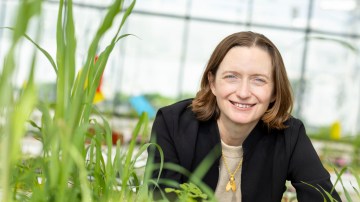
Moa chief executive Dr Virginia Corless in the company’s research glasshouses in North Yorkshire

An Oxford start-up developing ways to kill herbicide-resistant weeds has struck a breakthrough deal with the Australian group Nufarm to license its technology.

Moa Technology, led by chief executive Virginia Corless, has sold the rights to a synthetic herbicide developed in its facilities in North Yorkshire, where it uses miniature plants to find synthetic and biological herbicides.

The deal is thought to be worth hundreds of millions of dollars in staged payments and royalties from future sales, based on projections of sales of similar herbicides in industry disclosures by the likes of Bayer’s crop sciences division.

Corless, 41, who joined Moa in 2021 from a German clean technology business, said: “This agreement is further validation of our unique capability to find new herbicidal modes of action at an unprecedented rate and optimise them to become viable candidates for commercialisation.”

“Our talented team is working hard to provide new options to help farmers to grow food sustainably, and that means finding forward-looking partners like Nufarm who share our vision and want to work with us on the next stages of development and commercialisation.”

Moa is aiming to tackle the growth in herbicide-resistant weeds, such as pigweed, mare’s tail and water hemp, which can reduce crop yields by more than half. Its technology is based on research by co-founders Liam Dolan, professor of botany at the University of Oxford, and former research fellow Clément Champion. They spun the company out of Oxford’s plant sciences department in 2017. It raised its latest round of investment in 2022, securing £35 million from investors including Lansdowne Partners, IP Group and Oxford Science Enterprises.

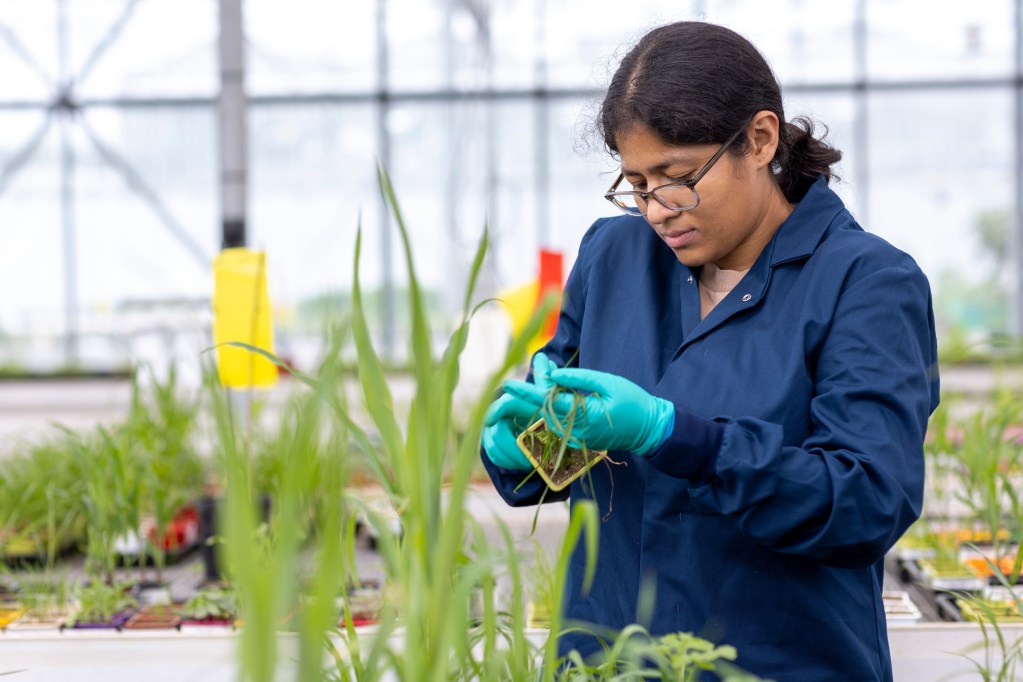
Weed biologist Ujjaini Sengupta assessing the effect of a herbicide on the weed lolium multiflorum.

Weed biologist Ujjaini Sengupta assessing the effect of a herbicide on the weed lolium multiflorum.

In March, Moa struck a ten-year partnership with speciality chemicals group Croda International to develop bioherbicides for farms, which will be produced in volume at Croda’s manufacturing facilities. The FTSE 100 company estimated that the $5 billion biopesticide market is growing at about 8 per cent a year.

Moa operates research glasshouses on a 75 hectare site at Cawood between Leeds and York in North Yorkshire, where its novel biological and synthetic herbicides are tested on 14 different weed species.

Bayer, the German pharmaceuticals group, said last month that it would launch ten blockbuster products from its crop sciences division in the next ten years to support farmers, including a new herbicide molecule that had the potential to make €750 million a year in revenues.

‍

Press Release
Written by Alexandra Ranson
July 8 2024
Moa harvests global deal for new herbicide
Read more

Moa harvests global deal for new herbicide

Oxford, UK  8 July2024 – Agricultural biotech firm Moa Technology has signed a research and commercial partnership with Nufarm,a global agricultural innovator based in Melbourne, Australia.

Moa has discovered several promising new classes of herbicide with its breakthrough innovation platform, which are currently in field trials in the US, UK, France and Spain. The deal provides Nufarm exclusive access to a new mode of action product in one of these. Weeds pose a serious and increasing threat to crop harvests around the world, and there is growing demand from farmers for new, safe and effective weed management solutions.  

In return, Moa will receive upfront payments, milestone development payments and eventual royalties from sales of the herbicide, which could be the first broad spectrum agricultural herbicide to work in a completely different way in forty years.   Nufarm will also exclusively retain the option to commercialise other Moa compounds from the same mode of action area.”

Together Moa and Nufarm will be responsible for steering the new chemical series through the research phase, expected to take around two years, while Nufarm will lead the final phases of development and go-to-market.

Spun out of Oxford University in 2017, Moa has developed a proprietary biological platform to discover a whole new generation of synthetic and bio-herbicidal compounds based on novel modes of action, to provide farmers with safe, cost-effective, technologically-advanced solutions at a pace weeds cannot match.  In the last three years, Moa’s platform has already screened over 750,000 compounds and discovered 60 promising novel modes of action areas, with multiple candidates already in field trials after successfully completing laboratory validation and glasshouse testing.

Commenting on the deal, Moa Technology CEO Dr. Virginia Corless said:

“This agreement is further validation of our unique capability to find new herbicidal modes of action at an unprecedented rate and optimise them into viable candidates for commercialisation.  Our talented team is working hard to provide new options to help farmers to grow food sustainably, and that means finding forward-looking partners like Nufarm who share our vision and want to work with us on the next stages of development and commercialization.”  

Commenting on the deal, Nufarm Group Executive Portfolio Solutions, Rico Christensen said:

“Nufarm is transforming agriculture by bringing new innovative crop protection and seed solutions to farmers. This agreement with Moa is another important milestone which will potentially bring new mode of action herbicides to help address the challenge of resistant weeds which are estimated to cost farmers billions every year.”

END

For more information:

Alexandra Ranson, Head of Corporate Affairs, Moa Technology

+44 7946 283956 alexandra.ranson@moa-technology.com

‍